

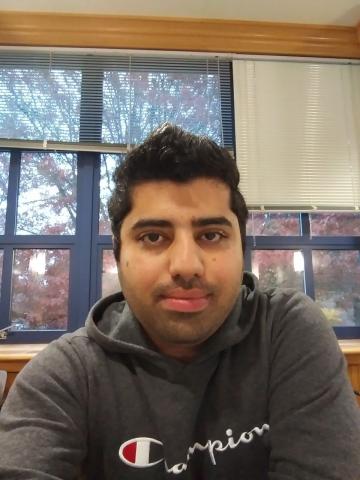
Amir Veyseh, a third-year Ph.D. student at the CIS department of the University of Oregon, won the competitive Adobe Research Fellowship. Only 10 awardees were selected world-wide for 2021.
Amir is a PhD student in the CIS department under the supervision of Prof. Thien Huu Nguyen. Prior to joining UO, Amir graduated with a B.Sc. degree in Computer Engineering from the Amirkabir University of Technology, Iran. He also graduated with an M.Sc. degree in Computer Engineering from the University of Tehran, Iran. His research interests lie in Natural Language Processing and Deep Learning with an emphasis on Information Extraction, aiming to process texts and automatically extract important information. IE has applications on building intelligent systems, supporting decision making (e.g, disaster alerts, resource allocations), among others. Amir has worked on different aspects of IE including Relation Extraction, Event Detection, Definition Extraction, and Rumor Resolution. In his research, Amir focuses on studying how structural information for text can be efficiently generated and incorporated into deep learning models for IE and NLP problems.
About Adobe Research Fellowship:
Adobe Research Fellowship (https://research.adobe.com/
More about Amir's Research:
Long texts (e.g., long documents) present a significant challenge for deep learning models in information extraction due to their length and the more complicated interactions of the involving text objects. In his research, Amir proposes a novel approach to address this long-text challenge based on text structures. In this method, only important objects (e.g., words, sentences) in texts are selected to represent long input texts, thus artificially reducing input lengths. Structures or graphs for input texts are then inferred leveraging relevant interactions between those important objects for information extraction. In Amir’s research, various knowledge sources and techniques are introduced to infer text structures, serving as an effective intermediate layer to induce text representations for information extraction in deep learning models. Based on this innovation, Amir’s research has significantly advanced the performance of relation extraction and event extraction systems when there are no high-quality off-the-shelf tools to obtain the structures of the input text. The results from this research direction have led to several papers published at the top-tier conferences in the field.
Overall, despite being in his third year of the PhD program, Amir has published 15 papers in top-tier conferences and workshops in Natural Language Processing and Artificial Intelligence (i.e., ACL, EMNLP, AAAI, and IJCAI). Recently, along with his advisor, Amir has also organized a workshop on scientific document understanding at the AAAI 2020 conference and contributed to this field by introducing the largest available acronym expansion dataset: https://sites.google.com/view/